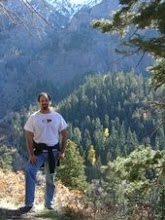
I think the sun is nice. It is nice when it is about 23 degrees celsius. However, I do not like it when it is cold and/or rainy. Sleet is right out.
(Insiders will understand why this blog entry differs from others.)
Tuesday, March 18, 2008


Saturday, March 15, 2008
Saturday, February 23, 2008
W must go!!!
OK, I realize this may be one of my much more controversial blog posts. And I have carefully considered the possible damage to my career, grant funding, colleagues, friends, family, and some of you. This may be seen as un-American. This is why I keep this a nonpolitical blog. But I have to speak up. It is so frustrating being an American here in Europe, continually apologizing for W. It really is a deserved and abiding national disgrace. And change is not impossible, I describe how. And I will not be a hypocrite on this point, and will do my best to lead a sincere effort to make things better.
But first, we have to agree on 3 things:
1) That W is the worst of all of them. If you disagree, that's OK, keep reading, I will get to that soon. But I am very confident I have a novel argument for getting rid of W for good, and you will be flummoxed.
2) And let me next propose that some Europeans have a better system, and we should adopt theirs. Yeah, I know, fucking expat, why don't you just stay over there? And I told you, I am done with W for good, and you will be too. But at least hear me out.
3) It really does matter. In an era when much of the world is moving forward and embracing new technologies and the internets, we are critically limited by the ongoing, maddening, daily inanity of W.
point 1) W is THE WORST of all. It is. All other letters require only one syllable, and W requires three. Most other letters can be easily pronounced with only three letters: bee, kay, yoo, zee. W is one of the widest of all letters, which played havoc with writing neat papers in the old days. Why? Change is in the American spirit. Why don't we change?
point 2) Here are two superior European methods. In Germany, that letter is pronounced "vee." In England, it is "dub." One syllable, not three. In America, the best we can come up with seems to be the intermediate "dubya." Two syllables. Now, again, this is a strictly nonpolitical blog, but speaking only linguistically, dubya ranks between the absolute stupidest of them all, and simply dub.
My low-effort research around the lab has concluded that other European languages have either one or three syllabes for W, but never 2. French, Spanish, and Romanian have 3 syllables. Cyrillic has no W, but has a similar looking symbol pronounced 'sh.' So we could kinda be a trendsetter here. The Euros would be so pissed. The French Language Institute would commit suicide. And it would sound beautiful.
point 3) It matters more and more in an era when the triple use of W is waxing as it is. It could well swing the war on terror. Imagine the following scenarios:
English captain: Bloody hell! A bomber!
English leader: Attack it!
English captain: Dash! The bloody computer doesn't work!
English leader: Quick, go to dub dub dub freetrackingsoftware.org!!
Try changing the last line to:
German Fueher: Schnell, gehen Sie zu vee vee vee freetrackingsoftware.org
American leader: Quick, go to doubleyew doubleyew doubleyew (boom)
So, to compete with the rest of the world, increase commercial efficacy, and provide for the common defense, I propose we the people adopt the British pronunciation of dub instead. Now I don't mean we get rid of W graphically, just phoenetically. Obviously, I do not propose:
Dubho's Afraid of Virginia Duboolf?
Dubhy, God, Dubhy!?!!!!?!!
Dube fedub, Dube happy fedub, dubhe band of brothers.
So that is my way of explaining why I may henceforth use "dub," and consider you rather backward and simple if you still like dubya after all this.
Dont be embarrased at your flummoxitaciousness. It's OK to be wrong about W. Join the smart crowd. It is the easiest revolution in history. You do not have to grab a sword, chant in the rain, send in money, or even get off your ass. You just have to say less.
But first, we have to agree on 3 things:
1) That W is the worst of all of them. If you disagree, that's OK, keep reading, I will get to that soon. But I am very confident I have a novel argument for getting rid of W for good, and you will be flummoxed.
2) And let me next propose that some Europeans have a better system, and we should adopt theirs. Yeah, I know, fucking expat, why don't you just stay over there? And I told you, I am done with W for good, and you will be too. But at least hear me out.
3) It really does matter. In an era when much of the world is moving forward and embracing new technologies and the internets, we are critically limited by the ongoing, maddening, daily inanity of W.
point 1) W is THE WORST of all. It is. All other letters require only one syllable, and W requires three. Most other letters can be easily pronounced with only three letters: bee, kay, yoo, zee. W is one of the widest of all letters, which played havoc with writing neat papers in the old days. Why? Change is in the American spirit. Why don't we change?
point 2) Here are two superior European methods. In Germany, that letter is pronounced "vee." In England, it is "dub." One syllable, not three. In America, the best we can come up with seems to be the intermediate "dubya." Two syllables. Now, again, this is a strictly nonpolitical blog, but speaking only linguistically, dubya ranks between the absolute stupidest of them all, and simply dub.
My low-effort research around the lab has concluded that other European languages have either one or three syllabes for W, but never 2. French, Spanish, and Romanian have 3 syllables. Cyrillic has no W, but has a similar looking symbol pronounced 'sh.' So we could kinda be a trendsetter here. The Euros would be so pissed. The French Language Institute would commit suicide. And it would sound beautiful.
point 3) It matters more and more in an era when the triple use of W is waxing as it is. It could well swing the war on terror. Imagine the following scenarios:
English captain: Bloody hell! A bomber!
English leader: Attack it!
English captain: Dash! The bloody computer doesn't work!
English leader: Quick, go to dub dub dub freetrackingsoftware.org!!
Try changing the last line to:
German Fueher: Schnell, gehen Sie zu vee vee vee freetrackingsoftware.org
American leader: Quick, go to doubleyew doubleyew doubleyew (boom)
So, to compete with the rest of the world, increase commercial efficacy, and provide for the common defense, I propose we the people adopt the British pronunciation of dub instead. Now I don't mean we get rid of W graphically, just phoenetically. Obviously, I do not propose:
Dubho's Afraid of Virginia Duboolf?
Dubhy, God, Dubhy!?!!!!?!!
Dube fedub, Dube happy fedub, dubhe band of brothers.
So that is my way of explaining why I may henceforth use "dub," and consider you rather backward and simple if you still like dubya after all this.
Dont be embarrased at your flummoxitaciousness. It's OK to be wrong about W. Join the smart crowd. It is the easiest revolution in history. You do not have to grab a sword, chant in the rain, send in money, or even get off your ass. You just have to say less.
Saturday, February 16, 2008
Kohlfahrt
It is a cold but sunny Saturday morning in Bremen. I now depart for Kohlfahrt, an intriguing German tradition. Work colleagues pay 30 Euros each. This is used to buy a wagon full of flavored Schnapps and other gut twisting nasty concoctions. It also provides for a feast at the end. We all meet - fairly soon, actually - at a streetcar stop wearing a cup and a string tying it around the neck. I have just made the latter from a dangling piece of laundry hanging wire. The boss may show up, but only at the beginning. You are supposed to get really drunk. By German standards, this means dead, and so I will not struggle to keep up.
Last weekend I went to Groningen with my cousin John. This was a pleasant town. We rode bikes around a big lake on a sunny day. This was my first time riding a bicycle in heavy traffic. Them Dutch get all into it, with bicycle turn and passing lanes, hand signals, glaring, and of course bells. No horns, all bells. Gotta clear them confused Americans somehow.
On the way back, two passport police checked our passports. They were polite and proceeded throughout the train without incident. Excluding one guy, who happened to be sitting really near us. He claimed to be a Nigerian citizen with a Nigerian passport living in Spain. He said he was going from Amsterdam to Germany to visit a friend. The passport cop was clearly suspicious. On questioning, he gave inconsistent answers about the duration and goals of his travels. The passport cop explained that the picture on the passport did not look like him, and said they would head down to the station for an identity check, and if there was no problem, he would be released. The guy tried to stand up, and was blocked. Then the funny part. He asked, quite politely and reasonably, if he could just go back to Amsterdam. He then continued to argue for this, as if it were a perfectly reasonable option. Why not? Just get off at the next station, turn around, no problem. I'll even take back the mushrooms I was smuggling. The passport cop was quite polite, spoke good english, kept his large frame right in the aisle to prevent movement, and kept saying no. The second passport cop, who had gone off to do some other stuff, noteworthily came back to help his buddy right when the train was about to pull in. More cops were at the station, obviously waiting. They went off without incident, except the guy continued to plead for a return and forget option.
Last weekend I went to Groningen with my cousin John. This was a pleasant town. We rode bikes around a big lake on a sunny day. This was my first time riding a bicycle in heavy traffic. Them Dutch get all into it, with bicycle turn and passing lanes, hand signals, glaring, and of course bells. No horns, all bells. Gotta clear them confused Americans somehow.
On the way back, two passport police checked our passports. They were polite and proceeded throughout the train without incident. Excluding one guy, who happened to be sitting really near us. He claimed to be a Nigerian citizen with a Nigerian passport living in Spain. He said he was going from Amsterdam to Germany to visit a friend. The passport cop was clearly suspicious. On questioning, he gave inconsistent answers about the duration and goals of his travels. The passport cop explained that the picture on the passport did not look like him, and said they would head down to the station for an identity check, and if there was no problem, he would be released. The guy tried to stand up, and was blocked. Then the funny part. He asked, quite politely and reasonably, if he could just go back to Amsterdam. He then continued to argue for this, as if it were a perfectly reasonable option. Why not? Just get off at the next station, turn around, no problem. I'll even take back the mushrooms I was smuggling. The passport cop was quite polite, spoke good english, kept his large frame right in the aisle to prevent movement, and kept saying no. The second passport cop, who had gone off to do some other stuff, noteworthily came back to help his buddy right when the train was about to pull in. More cops were at the station, obviously waiting. They went off without incident, except the guy continued to plead for a return and forget option.
Thursday, January 17, 2008
Brussels Spouts
Next week, I travel to Bruxelles to meet with our contact from EU headquarters regarding our grant application. Herr Dr. Prof. Graeser, Bernhard, and I will travel there, along with several other partners from all about our group. This is a formal introduction to the EU contact and a pre-negotiation pending our larger, more formal second negotiation in March. I spent the last couple days working on my talk, and will spend the next week preparing. I asked several people who went to these things what to expect. Here it is:
I give my talk.
EU contact: Thank you! So, how about you do all the work in this grant proposal, plus more, with less money?
Us: No.
EU contact: Well, how about just the less money part?
Us: No.
EU contact: Hm. I can't help but notice one of the partners isn't here ... perhaps we could cut him out?
Us: No.
EU contact: I notice that partner X, sitting here, doesn't speak English so well. Maybe we could marginally pare his fee?
Partner X: Que?
EU contact: I said, would you like some coffee?
Partner X: No.
Us: No.
EU contact: Let's work together to find some little part that is not so important.
Us: It is all important.
EU contact: How about not testing your software?
Us: No.
EU contact: Do you really need electrode caps?
Us: Yes.
EU contact: How about communicating with each other less?
Us: No.
(4 hours later)
Us: You see? It is all important.
EU contact: Herr Doktor Professor Graeser, members of the consortium, thank you very much for joining us here in Bruxelles. This concludes the first phase of our negotiations. We look forward to hosting you again in March!
That was fun, but here is other buzz.
In addition to funding us, the EU wisely decided to fund the huge proposal headed by all the powerhouses in Europe, plus one other BCI proposal. This is particularly well timed since it can feed on the decline of the American scientific infrastructure. The Dutch, Germans, and others are also funding BCI work more aggressively. This will create BCI research boom in Europe. There will probably be some overarching affiliation among the three funded projects, headed by the biggest, which is fine with me.
So the trip to Bruxelles should be fun and educational. It is one major European capital I have never seen. I leave the morning of the 25th, and then meet my cousin John to goof off for a couple days.
Two weeks ago, Mr. Landlord decided to move a bunch of junk out of the laundry room and paint and tile it. This was a good long term move. Telling me a priori would have been nice, as a side effect was that the room was off limits for 2 weeks while inept construction workers trudged intermittently. But, yesterday, the laundry room and thus machine were available! After 2 loads of laundry, then hanging it up on those fucking outdated clotheslines, I started eyeing the broken dryer on the other side of the room. It had been on its side, covered in wood, and buckets of paint, and drywall, and junk, with a big broken sign on it. Mr. Landlord had explained that it was broken, in case I didn't understand the sign in English and German, and now that I thought about it that was a bit suspicious. And he had lied to me before. And was obsessed with saving energy, and bitched at me about how much dryers cost. Hm. Hm. Hmmmm. Now it was only on its side, covered with a broken sign and admonition from Mr. Dishonest Landlord. Soon, it was right side up, plugged in, with a gym towel and two old socks volunteering their unscorched souls as test subjects. In the absolute worst case, I figured, my landlord had understated the danger, and I would die. But in a reasonable worst case, I would not damage it more or start a fire with me standing there. 2 minutes later. No smoke. No sign of the upstairs roomie nor Mr. Landlord - who, for added fun, lives upstairs of upstairs roomie. 2 more minutes. Clothes seem warm, pretty wet. 30 minutes later. Clothes perfect. 31 minutes later: half of clohtes off of clotheslines and tumblin away. I just have to remember to only dry clothes in the middle of the night, and otherwise leave the dryer unplugged and on its side. This is much more fun than a regular dryer, or landlord.
I give my talk.
EU contact: Thank you! So, how about you do all the work in this grant proposal, plus more, with less money?
Us: No.
EU contact: Well, how about just the less money part?
Us: No.
EU contact: Hm. I can't help but notice one of the partners isn't here ... perhaps we could cut him out?
Us: No.
EU contact: I notice that partner X, sitting here, doesn't speak English so well. Maybe we could marginally pare his fee?
Partner X: Que?
EU contact: I said, would you like some coffee?
Partner X: No.
Us: No.
EU contact: Let's work together to find some little part that is not so important.
Us: It is all important.
EU contact: How about not testing your software?
Us: No.
EU contact: Do you really need electrode caps?
Us: Yes.
EU contact: How about communicating with each other less?
Us: No.
(4 hours later)
Us: You see? It is all important.
EU contact: Herr Doktor Professor Graeser, members of the consortium, thank you very much for joining us here in Bruxelles. This concludes the first phase of our negotiations. We look forward to hosting you again in March!
That was fun, but here is other buzz.
In addition to funding us, the EU wisely decided to fund the huge proposal headed by all the powerhouses in Europe, plus one other BCI proposal. This is particularly well timed since it can feed on the decline of the American scientific infrastructure. The Dutch, Germans, and others are also funding BCI work more aggressively. This will create BCI research boom in Europe. There will probably be some overarching affiliation among the three funded projects, headed by the biggest, which is fine with me.
So the trip to Bruxelles should be fun and educational. It is one major European capital I have never seen. I leave the morning of the 25th, and then meet my cousin John to goof off for a couple days.
Two weeks ago, Mr. Landlord decided to move a bunch of junk out of the laundry room and paint and tile it. This was a good long term move. Telling me a priori would have been nice, as a side effect was that the room was off limits for 2 weeks while inept construction workers trudged intermittently. But, yesterday, the laundry room and thus machine were available! After 2 loads of laundry, then hanging it up on those fucking outdated clotheslines, I started eyeing the broken dryer on the other side of the room. It had been on its side, covered in wood, and buckets of paint, and drywall, and junk, with a big broken sign on it. Mr. Landlord had explained that it was broken, in case I didn't understand the sign in English and German, and now that I thought about it that was a bit suspicious. And he had lied to me before. And was obsessed with saving energy, and bitched at me about how much dryers cost. Hm. Hm. Hmmmm. Now it was only on its side, covered with a broken sign and admonition from Mr. Dishonest Landlord. Soon, it was right side up, plugged in, with a gym towel and two old socks volunteering their unscorched souls as test subjects. In the absolute worst case, I figured, my landlord had understated the danger, and I would die. But in a reasonable worst case, I would not damage it more or start a fire with me standing there. 2 minutes later. No smoke. No sign of the upstairs roomie nor Mr. Landlord - who, for added fun, lives upstairs of upstairs roomie. 2 more minutes. Clothes seem warm, pretty wet. 30 minutes later. Clothes perfect. 31 minutes later: half of clohtes off of clotheslines and tumblin away. I just have to remember to only dry clothes in the middle of the night, and otherwise leave the dryer unplugged and on its side. This is much more fun than a regular dryer, or landlord.
Tuesday, December 18, 2007
Eurodining IV
How do the Germans do it? How do they fend off the winter depression that follows cold rain like more cold rain? Quite aggressively. Bremen has a huge Christmas market every day, with an ongoing carnival in the city center and lesser festivities throughout town. The city center has a little ferris wheel, 2 carousels, stages for little plays (guess which fairy tale they keep re-enacting), dozens of booths selling food, trinkets, clothes, and of course gluehwein. The gluehwein is the dominant feature; in addition to the many booths that sell gluehwein, and its variants, most booths that sell other things also sell gluehwein. I saw a cigar stand, cheese stand, and mittens-and-hats stand that each sold it. And why not? The Germans buy gluehwein everywhere.
Gluehwein. I had never heard of it before, yet gluehwein is the, um, sticky stuff that holds German society together through the long winters. Gluehwein is made by boiling red wine, then adding sugar and spices. At first, this struck me as way too sweet. But after trying some more of it, and after being cold and wet, and then trying some more of it, I suddenly realized it is quite good. There is a variant called feuerzangenbowle that is less-sweet gluehwein with rum, cooked in a huge copper kettle. Mmmmmm. At the booths, there are little tables without chairs where people mull and laugh and sip their gluehwein. Germans of all ages are there, unselfconscious as usual about being publicly drunk, 70 year old men laughing loudly at the same table as kids who had to be ditching high school.
Food booths are also busy, mostly selling crepes, pastries, grilled sausages and pig steaks, French fries or fried sliced potatoes with various toppings, and kartoffelpuffers. The latter is basically a latke. Mash some potatoes, maybe add some onion or thickening agent, shape like a cow patty, deep fry, and serve with applesauce. Good, and warm, and easy to eat. Not too healthy, but neither is gluehwein. Which the food booths also sell, of course.
Another new facet of my eurodining life is Mexican food. I returned from America last month with a bag full of refried beans, Tabasco, tortillas, three kinds of enchilada sauce, taco sauce, cotija cheese, and a bag of proper tortilla chips. My first weekend back, I was invited to Bernhard’s home to cook for him, his family, and some neighbors. They seemed quite delighted. Last week, I cooked carne asada for my friends Ola and Jonna. 2 days ago, I cooked for my landlord and his family, and they were quite pleased. Although there are Mexican food restaurants in Bremen, the Germans, with their poor judgement, seem to think that I can cook considerably better. So this is kinda fun. Even a simple quesadilla is exotic out here. Carne asada, which is simply marinated meat, is all the rage. I made guacamole and salsa and they didn’t know what to do with it, and were thoroughly confused by the refried beans, arguing briefly that they were not in fact beans because they did not resemble beans. I had to show them how to open a tortilla, fill it with these goodies and lettuce, tomato, cheese, etc, and roll it up. Actually that was very fun.
My grand plan to get a piñata out here has failed so far, though. That is a goal someday - after returning from the US (which will next occur in April), bring back enough gear, and a pinata, to support a large outdoor feast for 30-40 people in my lab. Grill pollo asado, carne asada, some cebollitas, make big bowls of guac and salsa, and serve with cotija cheese, lettuce, tomatoes, pico de gallo, onion and cilantro garnish, etc. I am making myself hungry, and hence am off to get some nice Swabisch food here in lovely Tuebingen.
Gluehwein. I had never heard of it before, yet gluehwein is the, um, sticky stuff that holds German society together through the long winters. Gluehwein is made by boiling red wine, then adding sugar and spices. At first, this struck me as way too sweet. But after trying some more of it, and after being cold and wet, and then trying some more of it, I suddenly realized it is quite good. There is a variant called feuerzangenbowle that is less-sweet gluehwein with rum, cooked in a huge copper kettle. Mmmmmm. At the booths, there are little tables without chairs where people mull and laugh and sip their gluehwein. Germans of all ages are there, unselfconscious as usual about being publicly drunk, 70 year old men laughing loudly at the same table as kids who had to be ditching high school.
Food booths are also busy, mostly selling crepes, pastries, grilled sausages and pig steaks, French fries or fried sliced potatoes with various toppings, and kartoffelpuffers. The latter is basically a latke. Mash some potatoes, maybe add some onion or thickening agent, shape like a cow patty, deep fry, and serve with applesauce. Good, and warm, and easy to eat. Not too healthy, but neither is gluehwein. Which the food booths also sell, of course.
Another new facet of my eurodining life is Mexican food. I returned from America last month with a bag full of refried beans, Tabasco, tortillas, three kinds of enchilada sauce, taco sauce, cotija cheese, and a bag of proper tortilla chips. My first weekend back, I was invited to Bernhard’s home to cook for him, his family, and some neighbors. They seemed quite delighted. Last week, I cooked carne asada for my friends Ola and Jonna. 2 days ago, I cooked for my landlord and his family, and they were quite pleased. Although there are Mexican food restaurants in Bremen, the Germans, with their poor judgement, seem to think that I can cook considerably better. So this is kinda fun. Even a simple quesadilla is exotic out here. Carne asada, which is simply marinated meat, is all the rage. I made guacamole and salsa and they didn’t know what to do with it, and were thoroughly confused by the refried beans, arguing briefly that they were not in fact beans because they did not resemble beans. I had to show them how to open a tortilla, fill it with these goodies and lettuce, tomato, cheese, etc, and roll it up. Actually that was very fun.
My grand plan to get a piñata out here has failed so far, though. That is a goal someday - after returning from the US (which will next occur in April), bring back enough gear, and a pinata, to support a large outdoor feast for 30-40 people in my lab. Grill pollo asado, carne asada, some cebollitas, make big bowls of guac and salsa, and serve with cotija cheese, lettuce, tomatoes, pico de gallo, onion and cilantro garnish, etc. I am making myself hungry, and hence am off to get some nice Swabisch food here in lovely Tuebingen.
The root of all evil
In an ironic follow up to my last blog entry, I have news to report from my professional writing career. On Oct 9, I submitted a 125 page grant application that was my biggest writing adventure since my thesis. The 10 days preceding its submission were among the busiest I can recall, featuring 4 all nighters. All this for a generally futile effort, since there were over 40 proposals submitted for the same pool of grant money, including one from a consortium of 15 of the best BCI labs in Europe.
It was thus with some surprise that we found out last week that my first grant earned a score of 14.5 out of 15, a legendary score, and is ranked first among all proposals. Neither my boss nor several veteran euro grantwriters even heard of such a high score; a 12 is considered quite good. Hence I will oversee a 3 year, €4.1M BCI research project featuring Bremen, Philips and another company in Holland, Telefonica in Spain, a university in Warsaw, and 2 entities in Ulster. Travel to these places will occur, and I will finally have some flexibility and resources to do the work I want. Not much, but enough to produce some good work and position myself to get more.
Now I am on a train to Regensburg, in southern Germany, to goof off for the weekend before meeting with Prof. Dr. Niels Birbaumer in Tuebingen next week. This trip was planned for months, with the goal of discussing a new grant proposal, and I do not know if Niels knows how well I did with my last proposal. So it should be a fun visit. I know how his proposal did (it was ranked eighth), so it is likely he knows that we got first. This puts me in a great negotiating position for discussing the next grant. Actually, nailing the grant proposal puts me in a great negotiating position in many other ways, with many other entities, but for now I am focusing on executing this grant.
The train ride, and indeed Germany in general, is decidedly less pleasant than before. Winter has covered the land like a thick dark blanket soaked in cold pee. Bremen’s reputation for lousy weather now makes sense to me. It is consistently cold, cloudy, wet, and gloomy, and the fact that the average day is literally seven hours long does not help. When you sleep in until 8 AM, and it’s still dark outside, plus cold and wet, you can’t help but be affected. Hence gluehwein and the Bremen Christmas market, which merits its own blog entry.
It was thus with some surprise that we found out last week that my first grant earned a score of 14.5 out of 15, a legendary score, and is ranked first among all proposals. Neither my boss nor several veteran euro grantwriters even heard of such a high score; a 12 is considered quite good. Hence I will oversee a 3 year, €4.1M BCI research project featuring Bremen, Philips and another company in Holland, Telefonica in Spain, a university in Warsaw, and 2 entities in Ulster. Travel to these places will occur, and I will finally have some flexibility and resources to do the work I want. Not much, but enough to produce some good work and position myself to get more.
Now I am on a train to Regensburg, in southern Germany, to goof off for the weekend before meeting with Prof. Dr. Niels Birbaumer in Tuebingen next week. This trip was planned for months, with the goal of discussing a new grant proposal, and I do not know if Niels knows how well I did with my last proposal. So it should be a fun visit. I know how his proposal did (it was ranked eighth), so it is likely he knows that we got first. This puts me in a great negotiating position for discussing the next grant. Actually, nailing the grant proposal puts me in a great negotiating position in many other ways, with many other entities, but for now I am focusing on executing this grant.
The train ride, and indeed Germany in general, is decidedly less pleasant than before. Winter has covered the land like a thick dark blanket soaked in cold pee. Bremen’s reputation for lousy weather now makes sense to me. It is consistently cold, cloudy, wet, and gloomy, and the fact that the average day is literally seven hours long does not help. When you sleep in until 8 AM, and it’s still dark outside, plus cold and wet, you can’t help but be affected. Hence gluehwein and the Bremen Christmas market, which merits its own blog entry.
Subscribe to:
Posts (Atom)