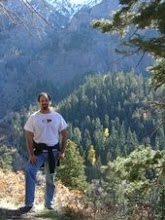
It's my last day in Malaga, where I arrived on Thursday for a conference. The tourist areas of Malaga are pretty similar to those in Valencia, Alicante, and several of the Canary Islands, with nearly identical hotels, tourists, restaurants, shops, etc. On this particular trip, I did not have any local contacts, which I'll have to work on next time, because Spain is of course not homogenous and I haven't even seen much of Malaga, let alone the rest of the magnificent and fabled province of Andalusia. Good accents too.
On the other hand, I wasn't in a particularly adventurous mood when I arrived. I was tired and overworked and had little interest in anything but the beach. I have not been to the beach this year - mid-June - a new record for me that I hope I never break. Now off to Barcelona for more work, then a free weekend, and back to Graz.
The tourist catering is always entertaining, and one notable amusement was SPF 100 sunscreen. I do not know when they invented this, but I don't remember seeing it a few years ago. The bottle touted the impressive technology, and I am sure there was some nontrivial cleverness involved in its invention. Still, it's just silly. SPF 100 means you could be in the sun all day, during a 16 hour day, and absorb the equivalent of less than 10 minutes of sunlight. (Actually, only UVB, since SPF curiously ignores UVA.) I don't know if it would stay on your skin that long, and doubt it really offers double the protection of SPF 50. Moreover, SPF 100 is overkill. It is enough to protect the palest Irishman if you put him in a microwave. You could rub it on the "Hyper Rescue Squad" they sent to Fukushima, and it would not only protect against radiation, but heal all damage they previously suffered. And yet I'm sure they will eventually come up with SPF 200 or beyond, through further clever technology, and it will sell. Dude, if you are that worried about sun damage, try a more established technology: a shirt. Better yet, stay in your hotel. Actually, why did you come to a sunny beach?
I know why I came: Sun. And beach. And also the prevalence of women on the beach who, like me, agree that bikini tops are overrated. One of the T-shirts sold to tourists had the logo from Hello Kitty, with a well endowed cat, and the first letter of Kitty was changed to match the other two consonants. Not a very witty ditty, but that is more or less what I thought as I walked up and down the beach. Whoa, those got my attention. Hello! Stare strategically. Keep walking. Don't know why you say goodbye; I say hello. Scan again. There's another one! (Expert's tip: there must be another one nearby, cause they travel in pairs.) And there is always the challenge of sifting out the less appealing ones before memory formation. Hello, says one little chunk of my primary visual area, through a direct connection to the limbic system. 50 milliseconds later, as the image went to higher processing, I worked out that the initial categorization should be overriden. If wondering if the target image is a floppy hat, or another roll of flab, or worst of all, a man, then immediately disengage, stop thinking about it, and purge that hippocampus as quickly as possible. Say goodbye to that memory.
Still, despite such disappointments, it was worth it overall. It somewhat assuages my envy toward my buddy Clemens, who is living in San Diego and thus has vastly superior waves and Mexican food, and access to many of my old friends. But not quite the view, at least until he discovers Black's Beach.
Monday, June 13, 2011


Sunday, March 27, 2011
Falling in War Again
"Hello, my ally!"
Guillaume looked affably confused. We're friends, and so I say hi to him often in the morning, but not quite like that.
"Would you like to join me for a morning coffee, my ally?"
"Sure." We went through our usual procedure with the Nespresso machine as I waited for the obvious. "Why do you call me your ally?" This was a week ago, right after I got back from my Brussels trip, so we hadn't discussed headlines yet.
"Well, we're at war again!"
"Ah?"
"In Libya." Now his face changed, and you could tell he got it. "And the US is allied with you, England, and not Germany. What were the odds? We got the band back together!"
"Just like old times."
Guillaume looked affably confused. We're friends, and so I say hi to him often in the morning, but not quite like that.
"Would you like to join me for a morning coffee, my ally?"
"Sure." We went through our usual procedure with the Nespresso machine as I waited for the obvious. "Why do you call me your ally?" This was a week ago, right after I got back from my Brussels trip, so we hadn't discussed headlines yet.
"Well, we're at war again!"
"Ah?"
"In Libya." Now his face changed, and you could tell he got it. "And the US is allied with you, England, and not Germany. What were the odds? We got the band back together!"
"Just like old times."
Friday, January 28, 2011
The Adventures of Dingo Chavez
Dear Modern Language Association:
I am sure you are familiar with the controversy regarding the new novel from NewSouth productions, which substitutes “slave” for "nigger" in the book currently titled “Huckleberry Finn.” However, I am surprised to see that most of this controversy misses the point. Even with the modifications, Twain’s work is so rife with politically incorrect language that far more extensive editing is necessary. Fortunately, as a revised version of the book currently titled “Tom Sawyer” has not yet been released, we have an opportunity to properly revise this putative American classic before further damage is done. I have most graciously taken it upon myself to initiate this effort, with some further modifications and a sample of revised text.
Of course, simply removing one word is inadequate. What of Jim himself, a real human, and Jim itself, a name that reflects the inhuman kidnapping, brainwashing, and oppression that led Jim, and “Jim”, to their roles in modern literature? To paraphrase Carroll, is Jim Jim, or is Jim simply what he is called? Hence, Jim is hereafter named Olaudah.
The term “Injun Joe” has long been a source of controversy. While there is universal agreement that the term is racist, there is inadequate appreciation of the designation that this gentlemen deserves. For far too long, modern society has ignored the true accomplishments of Native Oppressees, who may not have had official degrees recognized by ivory tower institutions (with all respect to your readers, of course), but were nonetheless quite learned in geography, history, lore, and many other fields. It is time for society to appreciate this knowledge. Hence, “Injun Joe” is now “Professor Josephson”, a Full Professor of Literature with an affiliation not specified in this manuscript.
Huckleberry Finn is, of course, doubly offensive. The phrase “I’m your Huckleberry” may have different associations that include violence. Other berries may be worse. A raspberry is now associated with a denigrating and vulgar emission that could bruise an ego for life. Elderberries convey ageism, and gooseberries may offend readers from underrepresented species. “Blackberry Finn” is right out. The surname is a racial slur. Hence, both “Huckleberry” and “Finn” need to be replaced with two names that are not necessarily negative. We can capitalize on this opportunity to compensate for many decades of antimulticulturalism by calling this character “Dingo Chavez”, although other suggestions are welcome.
Tom Sawyer needs a similar revision. While neither name is as blatantly denigrating as “Huckleberry” or “Finn”, the name also reflects a white European origin that may underrepresent the diversity of the world today. Hence, Dingo Chavez is complemented nicely with Long Thik Pu, whose name reflects influences from other regions. Ben Harper, in a new chapter, opts for surgery to become Sheena Tlateloco.
However, changing names is only the beginning of the solution. Countless other terms in the book currently titled “Tom Sawyer” might give offense. For example, in this engaging dialog, “Huck” informs “The Old Welshman” that he
"stood in the dark and heard the ragged one beg for the widder, and the Spaniard swear he'd spile her looks just as I told you and your two -- "
"What! The deaf and dumb man said all that!"
Huck had made another terrible mistake! He was trying his best to keep the old man from getting the faintest hint of who the Spaniard might be, and yet his tongue seemed determined to get him into trouble in spite of all he could do. He made several efforts to creep out of his scrape, but the old man's eye was upon him and he made blunder after blunder. Presently the Welshman said:
"My boy, don't be afraid of me. I wouldn't hurt a hair of your head for all the world. No -- I'd protect you -- I'd protect you. This Spaniard is not deaf and dumb; you've let that slip without intending it; you can't cover that up now. You know something about that Spaniard that you want to keep dark. Now trust me -- tell me what it is, and trust me -- I won't betray you."
Huck looked into the old man's honest eyes a moment, then bent over and whispered in his ear:
"'Tain't a Spaniard -- it's Injun Joe!"
The Welshman almost jumped out of his chair. In a moment he said:
"It's all plain enough, now. When you talked about notching ears and slitting noses I judged that that was your own embellishment, because white men don't take that sort of revenge. But an Injun! That's a different matter altogether."
It is a hearty, pulse-pounding passage – or would be, were the reader not constantly choked by insulting, misleading associations that clog the stream of consciousness like atherosclerotic plaque. Twain’s ignorance and passive malice are unconscionable. This passage reflects absolutely none of the sentiment and sensitive language of the politically correct movement! Aside from words that could be hurtful to persons with particular conditions, associations, or uniquenesses, the opening sentence implies that damaging a womyn’s appearance is a particularly grievous offense. Readers may be encouraged to associate appearance with character traits, and could not help but ponder violence against wymin. Worse, the passage concludes with the assertion that only persons without color would consider this harrowing prospect unconscionable. Hence, this threat is replaced with a lighthearted deflection.
"stood in the dark and heard the sartorially challenged gentleman beg for Ms. Douglas, whose current or former marital status may be kept private, and Don Bastardo swore he'd spile her books just as I told you and your two -- "
"What! The consistently quiet man said all that!"
Dingo had made another terrible mistake! He was trying his best to keep the wise gentleman from getting the faintest hint of who Don Bastardo might be, and yet his tongue seemed determined to get him into trouble in spite of all he could do. He made several efforts to creep out of his scrape, but the wise gentleman's eye was upon him and he made blunder after blunder. Presently the gentleman with unconventional payment tendencies said:
"My offspring, don't be afraid of me. I wouldn't hurt a hair of your head for free tofu. No -- I'd protect you -- I'd protect you. Don Bastardo is not consistently quiet; you've let that slip without intending it; you can't cover that up now. You know something about Don Bastardo that you want to keep secret. Now trust me -- tell me what it is, and trust me -- I won't betray you."
Dingo looked into the wise gentleman's honest eyes a moment, then bent over and whispered in his ear:
"'Tain't Don Bastardo - it's Professor Josephson!"
The gentleman with unconventional payment tendencies almost jumped out of his chair. In a moment he said:
"It's all plain enough, now. When you talked about notching "nigger" and substituting "slave," I judged that that was your own embellishment, because healthy people don't take that sort of revenge. But a Literature Professor! That's a different matter altogether."
I am sure you are familiar with the controversy regarding the new novel from NewSouth productions, which substitutes “slave” for "nigger" in the book currently titled “Huckleberry Finn.” However, I am surprised to see that most of this controversy misses the point. Even with the modifications, Twain’s work is so rife with politically incorrect language that far more extensive editing is necessary. Fortunately, as a revised version of the book currently titled “Tom Sawyer” has not yet been released, we have an opportunity to properly revise this putative American classic before further damage is done. I have most graciously taken it upon myself to initiate this effort, with some further modifications and a sample of revised text.
Of course, simply removing one word is inadequate. What of Jim himself, a real human, and Jim itself, a name that reflects the inhuman kidnapping, brainwashing, and oppression that led Jim, and “Jim”, to their roles in modern literature? To paraphrase Carroll, is Jim Jim, or is Jim simply what he is called? Hence, Jim is hereafter named Olaudah.
The term “Injun Joe” has long been a source of controversy. While there is universal agreement that the term is racist, there is inadequate appreciation of the designation that this gentlemen deserves. For far too long, modern society has ignored the true accomplishments of Native Oppressees, who may not have had official degrees recognized by ivory tower institutions (with all respect to your readers, of course), but were nonetheless quite learned in geography, history, lore, and many other fields. It is time for society to appreciate this knowledge. Hence, “Injun Joe” is now “Professor Josephson”, a Full Professor of Literature with an affiliation not specified in this manuscript.
Huckleberry Finn is, of course, doubly offensive. The phrase “I’m your Huckleberry” may have different associations that include violence. Other berries may be worse. A raspberry is now associated with a denigrating and vulgar emission that could bruise an ego for life. Elderberries convey ageism, and gooseberries may offend readers from underrepresented species. “Blackberry Finn” is right out. The surname is a racial slur. Hence, both “Huckleberry” and “Finn” need to be replaced with two names that are not necessarily negative. We can capitalize on this opportunity to compensate for many decades of antimulticulturalism by calling this character “Dingo Chavez”, although other suggestions are welcome.
Tom Sawyer needs a similar revision. While neither name is as blatantly denigrating as “Huckleberry” or “Finn”, the name also reflects a white European origin that may underrepresent the diversity of the world today. Hence, Dingo Chavez is complemented nicely with Long Thik Pu, whose name reflects influences from other regions. Ben Harper, in a new chapter, opts for surgery to become Sheena Tlateloco.
However, changing names is only the beginning of the solution. Countless other terms in the book currently titled “Tom Sawyer” might give offense. For example, in this engaging dialog, “Huck” informs “The Old Welshman” that he
"stood in the dark and heard the ragged one beg for the widder, and the Spaniard swear he'd spile her looks just as I told you and your two -- "
"What! The deaf and dumb man said all that!"
Huck had made another terrible mistake! He was trying his best to keep the old man from getting the faintest hint of who the Spaniard might be, and yet his tongue seemed determined to get him into trouble in spite of all he could do. He made several efforts to creep out of his scrape, but the old man's eye was upon him and he made blunder after blunder. Presently the Welshman said:
"My boy, don't be afraid of me. I wouldn't hurt a hair of your head for all the world. No -- I'd protect you -- I'd protect you. This Spaniard is not deaf and dumb; you've let that slip without intending it; you can't cover that up now. You know something about that Spaniard that you want to keep dark. Now trust me -- tell me what it is, and trust me -- I won't betray you."
Huck looked into the old man's honest eyes a moment, then bent over and whispered in his ear:
"'Tain't a Spaniard -- it's Injun Joe!"
The Welshman almost jumped out of his chair. In a moment he said:
"It's all plain enough, now. When you talked about notching ears and slitting noses I judged that that was your own embellishment, because white men don't take that sort of revenge. But an Injun! That's a different matter altogether."
It is a hearty, pulse-pounding passage – or would be, were the reader not constantly choked by insulting, misleading associations that clog the stream of consciousness like atherosclerotic plaque. Twain’s ignorance and passive malice are unconscionable. This passage reflects absolutely none of the sentiment and sensitive language of the politically correct movement! Aside from words that could be hurtful to persons with particular conditions, associations, or uniquenesses, the opening sentence implies that damaging a womyn’s appearance is a particularly grievous offense. Readers may be encouraged to associate appearance with character traits, and could not help but ponder violence against wymin. Worse, the passage concludes with the assertion that only persons without color would consider this harrowing prospect unconscionable. Hence, this threat is replaced with a lighthearted deflection.
"stood in the dark and heard the sartorially challenged gentleman beg for Ms. Douglas, whose current or former marital status may be kept private, and Don Bastardo swore he'd spile her books just as I told you and your two -- "
"What! The consistently quiet man said all that!"
Dingo had made another terrible mistake! He was trying his best to keep the wise gentleman from getting the faintest hint of who Don Bastardo might be, and yet his tongue seemed determined to get him into trouble in spite of all he could do. He made several efforts to creep out of his scrape, but the wise gentleman's eye was upon him and he made blunder after blunder. Presently the gentleman with unconventional payment tendencies said:
"My offspring, don't be afraid of me. I wouldn't hurt a hair of your head for free tofu. No -- I'd protect you -- I'd protect you. Don Bastardo is not consistently quiet; you've let that slip without intending it; you can't cover that up now. You know something about Don Bastardo that you want to keep secret. Now trust me -- tell me what it is, and trust me -- I won't betray you."
Dingo looked into the wise gentleman's honest eyes a moment, then bent over and whispered in his ear:
"'Tain't Don Bastardo - it's Professor Josephson!"
The gentleman with unconventional payment tendencies almost jumped out of his chair. In a moment he said:
"It's all plain enough, now. When you talked about notching "nigger" and substituting "slave," I judged that that was your own embellishment, because healthy people don't take that sort of revenge. But a Literature Professor! That's a different matter altogether."
Saturday, January 22, 2011
uv ajed
Is Telepathy Sound? Bem et al. (2010) Scientific grant proposal
Background and Need
Recently, Bem et al. (2010) has raised a firestorm of controversy over statistics and a nova of controversy over their highly significant and nontrivial implications. Two keys to the scientific method are replicability and dissemination. New themes or directions should rely on studies that other could replicate to see whether similar results occur. One effort to replicate one experiment (Galak and Nelson 2010) did not produce an outcome supporting ESP. As its authors correctly noted, this failure to replicate results does not conclusively answer this very important research question. Hence, further efforts to assess this phenomenon are needed.
Opportunity
Furthermore, these efforts might be extended to improve the likelihood of detecting precognition. A recurring notion in Bem et al. (2010) is that persons could anticipate erotic stimuli (specifically, images presented on a monitor) statistically above chance because of ESP, and that they did not anticipate non-erotic stimuli above chance. This presumably occurs because only erotic stimuli are sufficiently titillating to produce arousal even a few seconds before their generation. Notably, these effects occurred in unscreened Psychology students, and hence could be validated by other persons who work in a Psychology environment, such as the grantwriter and his colleagues.
Hence, this proposal capitalizes on this opportunity by delivering a series of studies that replicate key elements of Bem et al. (2010). Furthermore, to increase the likelihood that precognitive effects (if existent) are observed, the emotional salience of the erotic stimuli will be substantially increased.
Research Procedure
This study will assess whether male persons who work in a Psychology environment can anticipate erotic events before they occur. Advertisements will be posted through numerous mechanisms to seek female Psychology students eager to contribute to a scientific endeavor of pivotal importance. To avoid ethical issues surrounding proper treatment of research subjects, these persons will not be research subjects (as noted below).
First, the grantwriter (or one of his colleagues who he alone may designate) will be seated in a comfortable leather chair. Next, this person (who is the research subject) will be asked to guess which of two curtains will contain the erotic stimulus. After the guess is recorded, the student will be asked to stand behind one of the curtains (decided completely randomly) and disrobe. Next, the curtain that the subject picked will be lifted. If the experimenter fails to correctly guess the curtain that would contain the erotic stimulus, he will receive a mild electric shock. If he successfully guesses, the subject will be told that, for the good of science, she must provide the most erotically exhilarating reward ever. Indeed, if humanity is ever to resolve one of the most pressing and pondering quandaries in its entire history. you must challenge conceivable limits of what two human beings can handle. The experimenter shall similarly so endeavor, thereby increasing the likelihood that any effect (if any) is found.
One methodological facet of Bem et al. (2010) that was noted in Alcock's reply is that study's reliance on images that the research subject selected. To maximize accord with the original article, we will also allow the subject to select the erotic stimuli in this study.
To ensure that any desired effects can be found, we will also replicate scientific procedures and attitudes regarding multiple comparisons and post-hoc testing. Specifically, all subjects will complete a questionnaire with numerous questions about background, lifestyle, phone number, and other details that may correlate with psychic ability. Next, we will conduct several t tests. We will assess whether the subject could correctly guess the curtain more often than chance for students with certain characteristics or combinations of them. We will not apply correction for multiple comparisons, thus increasing the likelihood of attaining significant results. We will then develop an hypothesis consistent with these results.
Our guarantee of this project's success is the exceptional enthusiasm of the consortium. Our consortium relies on experts with very strong experience wanting to conduct a study of this nature. While we recognize that consortia and proposals often espouse eagerness toward a certain research direction, we really really mean it this time. We are very open to negotiate as needed to make this project a success. For example, to both broaden the statistical base and facilitate the reviewing procedure, it may be scientifically appropriate for some of the persons reviewing this grant to also participate as research subjects.
Conclusion
In summary, we need to resolve whether ESP is real. Bem et al. (2010) suggested that people may be able to anticipate erotic stimuli through ESP, but effect sizes were small, and could be amplified via more erotic stimuli. The opportunity to capitalize on this potential Kuhnian paradigm shift can not be ignored.
http://papers.ssrn.com/sol3/papers.cfm?abstract_id=1699970
http://www.nytimes.com/2011/01/11/science/11esp.html
http://www.csicop.org/specialarticles/show/response_to_alcocks_back_from_the_future_comments_on_bem
Background and Need
Recently, Bem et al. (2010) has raised a firestorm of controversy over statistics and a nova of controversy over their highly significant and nontrivial implications. Two keys to the scientific method are replicability and dissemination. New themes or directions should rely on studies that other could replicate to see whether similar results occur. One effort to replicate one experiment (Galak and Nelson 2010) did not produce an outcome supporting ESP. As its authors correctly noted, this failure to replicate results does not conclusively answer this very important research question. Hence, further efforts to assess this phenomenon are needed.
Opportunity
Furthermore, these efforts might be extended to improve the likelihood of detecting precognition. A recurring notion in Bem et al. (2010) is that persons could anticipate erotic stimuli (specifically, images presented on a monitor) statistically above chance because of ESP, and that they did not anticipate non-erotic stimuli above chance. This presumably occurs because only erotic stimuli are sufficiently titillating to produce arousal even a few seconds before their generation. Notably, these effects occurred in unscreened Psychology students, and hence could be validated by other persons who work in a Psychology environment, such as the grantwriter and his colleagues.
Hence, this proposal capitalizes on this opportunity by delivering a series of studies that replicate key elements of Bem et al. (2010). Furthermore, to increase the likelihood that precognitive effects (if existent) are observed, the emotional salience of the erotic stimuli will be substantially increased.
Research Procedure
This study will assess whether male persons who work in a Psychology environment can anticipate erotic events before they occur. Advertisements will be posted through numerous mechanisms to seek female Psychology students eager to contribute to a scientific endeavor of pivotal importance. To avoid ethical issues surrounding proper treatment of research subjects, these persons will not be research subjects (as noted below).
First, the grantwriter (or one of his colleagues who he alone may designate) will be seated in a comfortable leather chair. Next, this person (who is the research subject) will be asked to guess which of two curtains will contain the erotic stimulus. After the guess is recorded, the student will be asked to stand behind one of the curtains (decided completely randomly) and disrobe. Next, the curtain that the subject picked will be lifted. If the experimenter fails to correctly guess the curtain that would contain the erotic stimulus, he will receive a mild electric shock. If he successfully guesses, the subject will be told that, for the good of science, she must provide the most erotically exhilarating reward ever. Indeed, if humanity is ever to resolve one of the most pressing and pondering quandaries in its entire history. you must challenge conceivable limits of what two human beings can handle. The experimenter shall similarly so endeavor, thereby increasing the likelihood that any effect (if any) is found.
One methodological facet of Bem et al. (2010) that was noted in Alcock's reply is that study's reliance on images that the research subject selected. To maximize accord with the original article, we will also allow the subject to select the erotic stimuli in this study.
To ensure that any desired effects can be found, we will also replicate scientific procedures and attitudes regarding multiple comparisons and post-hoc testing. Specifically, all subjects will complete a questionnaire with numerous questions about background, lifestyle, phone number, and other details that may correlate with psychic ability. Next, we will conduct several t tests. We will assess whether the subject could correctly guess the curtain more often than chance for students with certain characteristics or combinations of them. We will not apply correction for multiple comparisons, thus increasing the likelihood of attaining significant results. We will then develop an hypothesis consistent with these results.
Our guarantee of this project's success is the exceptional enthusiasm of the consortium. Our consortium relies on experts with very strong experience wanting to conduct a study of this nature. While we recognize that consortia and proposals often espouse eagerness toward a certain research direction, we really really mean it this time. We are very open to negotiate as needed to make this project a success. For example, to both broaden the statistical base and facilitate the reviewing procedure, it may be scientifically appropriate for some of the persons reviewing this grant to also participate as research subjects.
Conclusion
In summary, we need to resolve whether ESP is real. Bem et al. (2010) suggested that people may be able to anticipate erotic stimuli through ESP, but effect sizes were small, and could be amplified via more erotic stimuli. The opportunity to capitalize on this potential Kuhnian paradigm shift can not be ignored.
http://papers.ssrn.com/sol3/papers.cfm?abstract_id=1699970
http://www.nytimes.com/2011/01/11/science/11esp.html
http://www.csicop.org/specialarticles/show/response_to_alcocks_back_from_the_future_comments_on_bem
Friday, January 21, 2011
ET Nay
I remember reading several months ago that ETA was trying to negotiate, and saw some updates last week. They said that ETA offered a cease-fire. I thought, good, that's progress. Then it said Spain said no. Oh, those scheming Nationalists, I thought! Then it explained why Spain said no: ETA only offered the ceasefire on the conditions that it not give up any weapons, and "progress" on Basque independence.
Why is this even news? Isn't this exactly the same position they held forever? "If you give us independence, then we will stop killing civilians." Duh. Yeah, we know that's what you what. The reason you did not get it is not that you didn't phrase it coyly enough. (Another reason is the Spaniards and French arrested half of you last year, so how about YOU make concessions?)
Is this an improvement of an earlier held position? Did they previously say: "If you give us independence, then we will continue killing civilians, and also cats" and then try to negotiate from there?
Berlin, 1945
Adolf Hitler complained about the Allied rejection of his cease-fire offer today, according to a man pointing a gun at me right now. "Why do they reject peace?" Hitler said, who is widely known for seeking peace, and being an underappreciated painter as well. "We made our offer and they chose war. How could they? What of all the innocent people?"
US President Roosevelt replied that he was always open to peace negotiations. However, he noted that the cease-fire offer included two conditions: first, the Nazi people would not give up weapons; and second, "progress" on non-German independence. Hitler agreed that the failed negotiations were America's fault. "If we could only resolve this nagging technicality regarding your independence, we could have a cease-fire. The world would be free of war. But no, the allies chose war, so we will push them all the way back to the Rhine!"
Why is this even news? Isn't this exactly the same position they held forever? "If you give us independence, then we will stop killing civilians." Duh. Yeah, we know that's what you what. The reason you did not get it is not that you didn't phrase it coyly enough. (Another reason is the Spaniards and French arrested half of you last year, so how about YOU make concessions?)
Is this an improvement of an earlier held position? Did they previously say: "If you give us independence, then we will continue killing civilians, and also cats" and then try to negotiate from there?
Berlin, 1945
Adolf Hitler complained about the Allied rejection of his cease-fire offer today, according to a man pointing a gun at me right now. "Why do they reject peace?" Hitler said, who is widely known for seeking peace, and being an underappreciated painter as well. "We made our offer and they chose war. How could they? What of all the innocent people?"
US President Roosevelt replied that he was always open to peace negotiations. However, he noted that the cease-fire offer included two conditions: first, the Nazi people would not give up weapons; and second, "progress" on non-German independence. Hitler agreed that the failed negotiations were America's fault. "If we could only resolve this nagging technicality regarding your independence, we could have a cease-fire. The world would be free of war. But no, the allies chose war, so we will push them all the way back to the Rhine!"
Sunday, December 26, 2010
On Krampus
I spent some of today in the lab, catching up on things and recovering from two days of generous feasting. Since I am on campus, I thought it would be fitting to write on Krampus. More on Him later.
It was a pretty generous Christmas, much more than I expected so far from home. I was invited for Christmas Eve dinner at the home of one of my labmates, which was quite kind. I brought some wine, chocolate, and T-shirts, the latter two from California. We had very good chicken soup, and a huge and generous platter of meats and egg and potato salad and numerous breads and lots of other things, then for dessert, roasted apples with cinnamon and raisins and walnuts. And plenty of nice conversation in a cozy home. I was quite happy. Badly overfed, but happy.
The next day, I was invited to Christmas lunch at another home, with people I knew even less, so I thought it especially nice to be invited. I again brought that trio of gifts, with 4 bottles of wine this time. This Christmas lunch was around noon or one, so I am not sure exactly what to call it. It was certainly cozy and Christmasy, with trees and decorations and a happy family. They had me fooled until the whole Krampus thing. Anyway.
The meal was, again, quite generous and tasty. The main meat element doesn't really exist in English, but it is essentially a slab of meat, rolled up and cooked, with gravy. And dumplings. And red cabbage with chestnuts. Then dessert was a sliced fruit bowl with cream. All of this was new and sumptuous. Also, in both houses, they had huge platters of assorted mini cakes and cookies, just in case you hadn't eaten quite enough for the week. I talked about Christmas turkeys with mashed potatoes and gravy and stuffing and cranberry sauce. And I told of my brother, teaching the Chinese how to cook such turkeys, and other Amerikanisch fare. I talked about exchanging gifts, which seems to be similar to the American way, except for the timing. And they had a wonderfully charming Christmas tree, just like one at home, with lights and ribbons and tinsel and hanging red balls and little alcohol filled chocolates hidden amongst the needles. All the gifts were glistening and well wrapped and inviting. I told them about the stockings (or perhaps there was a grievous mistranslation on my part). I said that Santa would bring a lump of coal for bad children. Note: Yes, this really is the absolute worst thing that ever happens to kids in American Christmas mythology. At the very worst, very bad kids get no toys from Santa, only a lump of coal. I say this to contrast him with Krampus.
Krampus is a mythical Austrian tormentor who hangs out with Santa Claus. While Santa rewards good children, Krampus punishes them, by beating them with chains and sticks and then putting them in baskets and hauling them away. They tell this to little 4 year old kids! Wide eyed and trusting, vulnerable, sweet. And I was just getting to trust Austrian people. Huh. Well, it figures. Same people who make little kids learn German.
On December 5, Austrian men play Krampus. This means that they dress up badly, go out in public, and get drunk. So far, no problem. I do this during Weinachtsfest a lot. It sounds like lots of holidays. But here is the evil Krampus part. They have chains and bells to frighten children. They go to shopping malls and other places, hit little kids (yes, I confirmed this part), chase them, ring bells, and try to scare them. Oddly, they do this indiscriminately, without even determining whether the kids were bad. I asked my hostess, and she said that she was chased and beaten as a little girl by scary Krampus man. In public. Didn't the other people do anything, I asked? Yes, she said. After a while, they told the Krampus men to stop. I said this would go much differently in the US, Texas in particular.
I had brunch this morning with a colleague and his family, including 2 little kids. I asked about Krampus. They confirmed it. They said it is used sometimes to motivate kids. Clemens told me something like this, but I didn't take it seriously, because he seems like a nice man. Sorry. Seemed.
I said that we have nothing like that in our Christmas mythology. We do have an old man that visits, sometimes two. He is often badly dressed, and sometimes drunk. But, he is not mean, but very loving and happy to see the kids. He brings presents and sometimes dresses up like Santa Claus. The men are not called Krampus, but Grampas.
One of the big headlines in Graz last year was when a man kidnapped his daughter and locked her in the cellar, where he beat her and was generally mean to her for 35 years. A few months later, it happened again. The Austrians were in shock. No, they said. Why? Why do they do this? I asked about it, and people said it was just a fluke. Yeah. They said that. Then, when I wasn't watching, they dressed up like Krampus, and went to public places, and threatened them with bells and chains and cellar damnation. Don't act all innocent.
To be fair, we do have Halloween. Old men dress badly, get drunk, go out in public, and scare children with bells, chains, ghost moaning, and bad breath. Other people confuse the kids by giving them candy. But that's totally different. For example, we also have the slutty costumes I mentioned before. What about that? (Not for the drunk old men.) What about some cultural merging, and we also say that on Dec 5, appropriate people also dress slutty? And, to further draw from this opportunity for cultural exchange, I should also tell you of the other part of our Halloween mythology, which is that they buy drinks for American BCI scientists. Let's get that tradition going, and it will really counter that Krampus grumpiness, at least for me.
http://en.wikipedia.org/wiki/Krampus
It was a pretty generous Christmas, much more than I expected so far from home. I was invited for Christmas Eve dinner at the home of one of my labmates, which was quite kind. I brought some wine, chocolate, and T-shirts, the latter two from California. We had very good chicken soup, and a huge and generous platter of meats and egg and potato salad and numerous breads and lots of other things, then for dessert, roasted apples with cinnamon and raisins and walnuts. And plenty of nice conversation in a cozy home. I was quite happy. Badly overfed, but happy.
The next day, I was invited to Christmas lunch at another home, with people I knew even less, so I thought it especially nice to be invited. I again brought that trio of gifts, with 4 bottles of wine this time. This Christmas lunch was around noon or one, so I am not sure exactly what to call it. It was certainly cozy and Christmasy, with trees and decorations and a happy family. They had me fooled until the whole Krampus thing. Anyway.
The meal was, again, quite generous and tasty. The main meat element doesn't really exist in English, but it is essentially a slab of meat, rolled up and cooked, with gravy. And dumplings. And red cabbage with chestnuts. Then dessert was a sliced fruit bowl with cream. All of this was new and sumptuous. Also, in both houses, they had huge platters of assorted mini cakes and cookies, just in case you hadn't eaten quite enough for the week. I talked about Christmas turkeys with mashed potatoes and gravy and stuffing and cranberry sauce. And I told of my brother, teaching the Chinese how to cook such turkeys, and other Amerikanisch fare. I talked about exchanging gifts, which seems to be similar to the American way, except for the timing. And they had a wonderfully charming Christmas tree, just like one at home, with lights and ribbons and tinsel and hanging red balls and little alcohol filled chocolates hidden amongst the needles. All the gifts were glistening and well wrapped and inviting. I told them about the stockings (or perhaps there was a grievous mistranslation on my part). I said that Santa would bring a lump of coal for bad children. Note: Yes, this really is the absolute worst thing that ever happens to kids in American Christmas mythology. At the very worst, very bad kids get no toys from Santa, only a lump of coal. I say this to contrast him with Krampus.
Krampus is a mythical Austrian tormentor who hangs out with Santa Claus. While Santa rewards good children, Krampus punishes them, by beating them with chains and sticks and then putting them in baskets and hauling them away. They tell this to little 4 year old kids! Wide eyed and trusting, vulnerable, sweet. And I was just getting to trust Austrian people. Huh. Well, it figures. Same people who make little kids learn German.
On December 5, Austrian men play Krampus. This means that they dress up badly, go out in public, and get drunk. So far, no problem. I do this during Weinachtsfest a lot. It sounds like lots of holidays. But here is the evil Krampus part. They have chains and bells to frighten children. They go to shopping malls and other places, hit little kids (yes, I confirmed this part), chase them, ring bells, and try to scare them. Oddly, they do this indiscriminately, without even determining whether the kids were bad. I asked my hostess, and she said that she was chased and beaten as a little girl by scary Krampus man. In public. Didn't the other people do anything, I asked? Yes, she said. After a while, they told the Krampus men to stop. I said this would go much differently in the US, Texas in particular.
I had brunch this morning with a colleague and his family, including 2 little kids. I asked about Krampus. They confirmed it. They said it is used sometimes to motivate kids. Clemens told me something like this, but I didn't take it seriously, because he seems like a nice man. Sorry. Seemed.
I said that we have nothing like that in our Christmas mythology. We do have an old man that visits, sometimes two. He is often badly dressed, and sometimes drunk. But, he is not mean, but very loving and happy to see the kids. He brings presents and sometimes dresses up like Santa Claus. The men are not called Krampus, but Grampas.
One of the big headlines in Graz last year was when a man kidnapped his daughter and locked her in the cellar, where he beat her and was generally mean to her for 35 years. A few months later, it happened again. The Austrians were in shock. No, they said. Why? Why do they do this? I asked about it, and people said it was just a fluke. Yeah. They said that. Then, when I wasn't watching, they dressed up like Krampus, and went to public places, and threatened them with bells and chains and cellar damnation. Don't act all innocent.
To be fair, we do have Halloween. Old men dress badly, get drunk, go out in public, and scare children with bells, chains, ghost moaning, and bad breath. Other people confuse the kids by giving them candy. But that's totally different. For example, we also have the slutty costumes I mentioned before. What about that? (Not for the drunk old men.) What about some cultural merging, and we also say that on Dec 5, appropriate people also dress slutty? And, to further draw from this opportunity for cultural exchange, I should also tell you of the other part of our Halloween mythology, which is that they buy drinks for American BCI scientists. Let's get that tradition going, and it will really counter that Krampus grumpiness, at least for me.
http://en.wikipedia.org/wiki/Krampus
Friday, December 3, 2010
The Eternal SiSiSi
Greetings from Rome, where the second TOBI workshop just ended. The workshop was generally successful, although bad weather and other factors caused all kinds of travel problems for many attendees. I was no exception; took me 14 hours to get from Graz to Rome, and the arrival time of my luggage remains unknown.
Rome is quite charming nonetheless. Our local hosts did a great job organizing, and were characteristically effusive and enthusiastic. I noticed that the locals seem unable to say yes once. Instead, just as Spaniards tend to say "vale" three times instead of once, Italians usually say "si" three or more times. Hence I redub the Eternal City: The Eternal SiSiSi.
And I bet it will catch on! Someday. If the city really is eternal, then I have lots of time.
The eternality of the city is best reflected in this conversation, which I had while sharing a taxi from the hotel to the conference site:
Me: "And so the hybrid BCI approach we are doing now is different from the - hey, look, Roman ruins!" (Everyone stops and stares.)
Colleague: "Yes. Um. Right. Uh. Where were we? Oh yes, hybrid BCIs. So - look, more ruins!" (everyone stares.)
After a few iterations of this, we kind of habituated, and even kept on topic for a little while.
Colleague: "But how can you resolve the - ah, more ruins up there, we must ignore them - how can you resolve the increased illiteracy risk?"
Me: "Well, it can reduce illiteracy if - wow, those ruins are huge! Anyway, so, um. You know, that looks a lot like the Coliseum."
Taxi driver: "That is the Coliseum." (everyone stops and stares.)
Long delay. Quite a shock to see one of the great edificies of world history, just, well, there, on the side of the road, coincidentally along our taxi ride. I guess I assumed it would be elevated, cloudborne, gleaming, surrounded by gold and the finest possible staff in resplendent raiment.
Me: "Dudes, why don't we enjoy the ride through Rome, and discuss work later?"
No objection.
"Sir, can you tell us about these new ruins up here?"
Taxi driver: "Si, si, si."
Rome is quite charming nonetheless. Our local hosts did a great job organizing, and were characteristically effusive and enthusiastic. I noticed that the locals seem unable to say yes once. Instead, just as Spaniards tend to say "vale" three times instead of once, Italians usually say "si" three or more times. Hence I redub the Eternal City: The Eternal SiSiSi.
And I bet it will catch on! Someday. If the city really is eternal, then I have lots of time.
The eternality of the city is best reflected in this conversation, which I had while sharing a taxi from the hotel to the conference site:
Me: "And so the hybrid BCI approach we are doing now is different from the - hey, look, Roman ruins!" (Everyone stops and stares.)
Colleague: "Yes. Um. Right. Uh. Where were we? Oh yes, hybrid BCIs. So - look, more ruins!" (everyone stares.)
After a few iterations of this, we kind of habituated, and even kept on topic for a little while.
Colleague: "But how can you resolve the - ah, more ruins up there, we must ignore them - how can you resolve the increased illiteracy risk?"
Me: "Well, it can reduce illiteracy if - wow, those ruins are huge! Anyway, so, um. You know, that looks a lot like the Coliseum."
Taxi driver: "That is the Coliseum." (everyone stops and stares.)
Long delay. Quite a shock to see one of the great edificies of world history, just, well, there, on the side of the road, coincidentally along our taxi ride. I guess I assumed it would be elevated, cloudborne, gleaming, surrounded by gold and the finest possible staff in resplendent raiment.
Me: "Dudes, why don't we enjoy the ride through Rome, and discuss work later?"
No objection.
"Sir, can you tell us about these new ruins up here?"
Taxi driver: "Si, si, si."
Subscribe to:
Posts (Atom)